Supplier Access and Load-In
This one gets overlooked almost every time, and it causes more stress on wedding days than almost anything else. Before you book a venue, ask specifically: how and where do suppliers load in?
A DJ typically arrives with speakers, stands, a DJ booth, cables, lighting rigs and flight cases. That's a lot of equipment to carry. If the only access to the room is through the main entrance, up two flights of stairs, through a narrow corridor — that's a significant problem. It takes longer, it costs more in effort, and if the room isn't available until late afternoon, it creates real time pressure for setup.
The questions to ask the venue:
- Is there a dedicated supplier entrance? Ideally separate from the guest entrance
- How close can vehicles get to the load-in point? Carrying equipment 200 metres across a gravel car park isn't ideal
- Are there stairs between the load-in point and the room? If yes, is there a lift?
- What time can suppliers access the room? The earlier the better — rushed setups cause problems
Parking — For Suppliers and Guests
Supplier parking is a separate issue to guest parking, and both matter. For suppliers, being able to park close to the venue for the duration of the event is important — DJs, caterers and photographers may need to return to their vehicles during the day.
For guests, easy and sufficient parking reduces the friction of getting to your venue, especially for older guests or those travelling from further away. An evening reception venue that requires a 15-minute walk from the nearest car park will put some guests off attending the evening, which affects the atmosphere you're paying for.
Watch out for city centre venues
City centre venues often have no dedicated supplier parking at all. Always ask whether there's a loading bay, how long you can use it, and where the nearest paid parking is for suppliers on the night.
Noise Restrictions and Curfews
This is the one that catches couples out most often. Many venues — particularly those in residential areas, listed buildings or hotel properties — have strict noise restrictions and hard music curfews. You might be planning a night that goes until 1am, only to find the music has to stop at 11pm.
Some venues also have noise limiters — electronic devices that cut the power to speakers if the volume exceeds a set level. These can be incredibly frustrating on the night, particularly during peak moments on the dance floor.
Always ask the venue directly:
- What time does music have to stop?
- Is there a noise limiter? What level is it set at?
- Are there any restrictions on the type of music or speakers?
- What happens if the limiter triggers? Does it cut power immediately?
A venue that's honest about its noise restrictions upfront is far better than one that surprises you on the night. Ask the question early, before you fall in love with the space.
Room Acoustics and Size
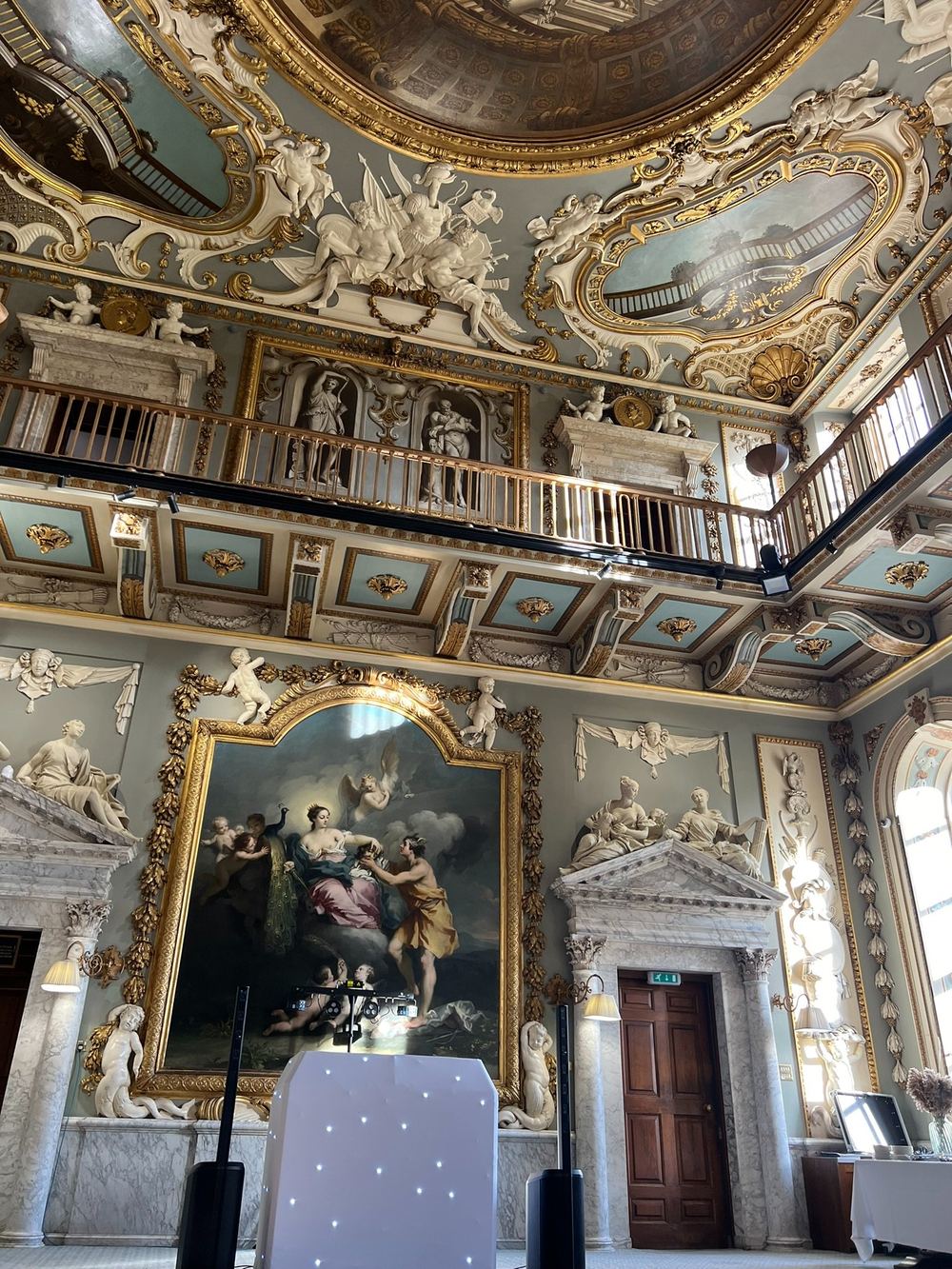
A room that looks stunning in photos doesn't always sound great. High ceilings, hard stone floors and glass walls create echo and reverberation that can make music sound muddy and speech difficult to understand. Soft furnishings, carpets and curtains absorb sound and generally produce a better result.
Room size matters too. A dance floor that's too big for your guest numbers will feel empty even when people are dancing — which affects the energy significantly. Conversely, a room that's too small gets hot and cramped quickly. Ask the venue what guest numbers they recommend for the room you're considering.
The Sound System — Theirs or Yours?
Some venues have their own installed sound systems. This can be great — it means a cleaner look with no visible speaker stands — but it also means the DJ is working with equipment they may not know, and it may not be up to the standard required for a full evening of dancing.
Always find out in advance whether the venue expects suppliers to use their sound system, bring their own, or whether either is acceptable. And if their system is mandatory, ask your DJ to check its specification before you commit to the venue.
The Full Venue Checklist
Before you sign anything, make sure you have answers to all of these:
- Dedicated supplier entrance — where is it and how close can vehicles get?
- What time do suppliers get access to set up?
- Is there supplier parking on site or nearby?
- What is the music curfew?
- Is there a noise limiter, and what level is it set at?
- How many guests does the room comfortably hold for a dance floor event?
- Does the venue have its own sound system, or do suppliers bring their own?
- What are the restrictions on lighting rigs and smoke/haze machines?
- Is there overnight security or a venue manager on site during the event?
- What is the latest finish time for guests to leave?
The Bottom Line
The venues that produce the best weddings are the ones that have thought carefully about how suppliers work within them. A great venue coordinator will be able to answer all of the above questions without hesitation, because they've dealt with them all before.
If a venue struggles to answer practical questions about supplier access, noise restrictions or parking — that tells you something about how prepared they are to make your wedding run smoothly.
Choose a venue that works, not just one that looks good in photos. The photos are forever, but so is the memory of how the night felt — and that's determined by the details.